If you've ever opened the crawl space door on a July afternoon and felt a wave of warm, wet air, you already understand the problem. Around Lake Norman, the air outside is often more humid than what your crawl space can handle. Encapsulation closes that space off from the outside and keeps it dry.
What crawl space encapsulation actually is
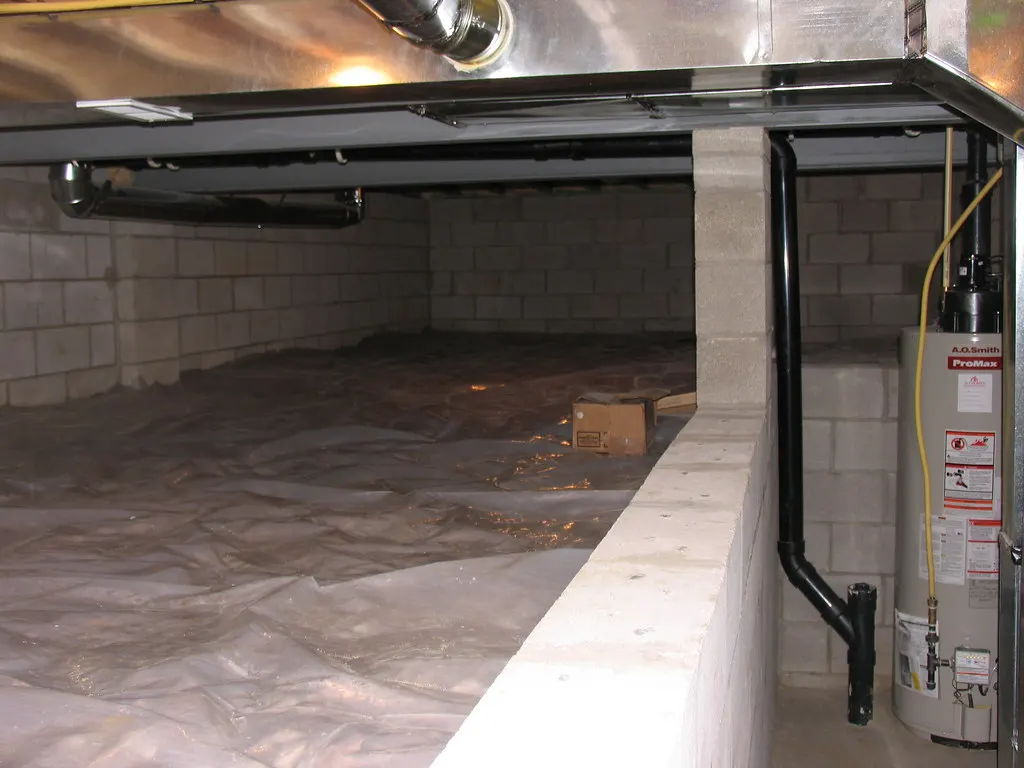
Encapsulation means turning your crawl space from an open, vented space into a sealed one. In plain terms, here's what's involved:
- A heavy liner on the floor. A thick, reinforced plastic liner covers the dirt and is overlapped and taped at the seams.
- Liner up the walls. The liner runs up the foundation walls and piers and is fastened in place, so ground moisture can't sneak around the edges.
- Sealed vents. Foundation vents are closed and sealed so humid summer air stops coming in.
- Air sealing. Gaps around pipes, wires and the rim area are sealed where needed.
- Humidity control. Most encapsulated crawl spaces get a dehumidifier to keep moisture in a safe range all year.
- A sealed access door. The old vented door is often swapped for one that closes tight.
The result is a crawl space that's clean, dry and closer to the conditions inside your home.
Why it works well in Mooresville
Mooresville's hot, humid summers and the moisture coming off Lake Norman make vented crawl spaces work against you. Every vent is a doorway for wet air. Add red clay soil that holds water after storms, and sloped lake lots that push runoff under the house, and you get crawl spaces that stay damp for months at a time.
Encapsulation tackles both sources at once. The liner blocks moisture rising from the soil, and the sealed vents block moisture from the air. That's why it's a common fix for older lake houses and newer subdivision homes alike.
Signs encapsulation might be the right call
Here's what we'd look for during an inspection:
- Moisture readings in the wood that are higher than they should be
- Ducts sweating or dripping in summer
- Mold or mildew on joists and the subfloor
- Thin, torn or missing plastic on the ground
- Insulation sagging or lying on the dirt
- A musty smell upstairs that comes and goes with the weather
If your crawl space only has a torn ground cover and otherwise looks dry, a vapor barrier alone may be enough. A good contractor will tell you which one makes sense.
How the job goes
- Prep. The crew clears debris, old plastic and fallen insulation. If there's mold on the framing, it gets treated first (see mold and moisture).
- Fix water first. If water is getting in after rain, that gets dealt with before sealing anything, often with drainage and a sump pump. Sealing over a water problem just hides it.
- Install the liner. Floor and walls are covered, seams are taped, and the liner is fastened along the walls and around piers.
- Seal vents and gaps. Vents are closed off and air leaks are sealed.
- Add humidity control. A dehumidifier is installed and set up.
- Walk-through. The installer shows you before and after photos and how to check the system.
Most encapsulations take one to three days, depending on the size of the space and how much prep is needed.
What it costs
Full encapsulation is the largest moisture job in a crawl space, and no two quotes look alike. The biggest factors are the square footage, how tall and easy to move around the space is, liner thickness, whether a dehumidifier or drainage is included, and how much cleanup or mold treatment is needed first. Your real price comes from a free on-site inspection and a written quote. See the crawl space cost guide for more detail.
What to ask any contractor
Encapsulation quotes can look very different from each other. Ask:
- How thick is the liner, and does it go up the walls and piers?
- Are the seams taped, and how is the liner fastened?
- Is a dehumidifier included, and what size?
- How will you handle the water that comes in after heavy rain?
- What prep and cleanup is included?
Good answers to these questions tell you more than the price alone.
Questions people ask
Is crawl space encapsulation worth it?
For a crawl space with high humidity, sweating ducts, mold or a persistent musty smell, it usually is. It protects the framing, helps the floors and insulation last, and improves the air that moves upstairs. If your crawl space is fairly dry, a vapor barrier may be the better value. The inspection should give you an honest take.
Do I need a dehumidifier with encapsulation?
In most cases around Lake Norman, yes. Sealing the space keeps outside moisture out, but some humidity still builds up from the ground, the house and small leaks. A dehumidifier keeps it in a safe range year-round.
Will encapsulation help my energy bills?
It often helps. A sealed, drier crawl space keeps floors from feeling as cold in winter and takes some load off your AC in summer. How much depends on your home, so nobody should promise you a specific savings number.
Can you encapsulate a crawl space that gets water after storms?
Yes, but the water has to be handled first. The contractor should find where it's coming in and usually add drainage or a sump pump before the liner goes down. Sealing over standing water just traps the problem.