Mold in a crawl space almost never shows up by itself. It's a symptom. Something is keeping the wood damp, and mold is just taking advantage of it. That's why a good contractor treats both parts: the growth you can see, and the moisture behind it.
What crawl space mold looks like
You might hear "mold" and picture a black, fuzzy mess. Sometimes it is. Often it's subtler. Here's what we'd look for under your house:
- White, fuzzy or powdery spots on joists and the subfloor
- Green, gray or black staining on wood
- Patches that look like dust but smear when touched
- Wood that feels damp or soft
- A musty smell that gets stronger near the crawl space door
You don't have to identify the type of mold to know there's a problem. If it's growing on your framing, the conditions under the house need to change.
Why it happens here
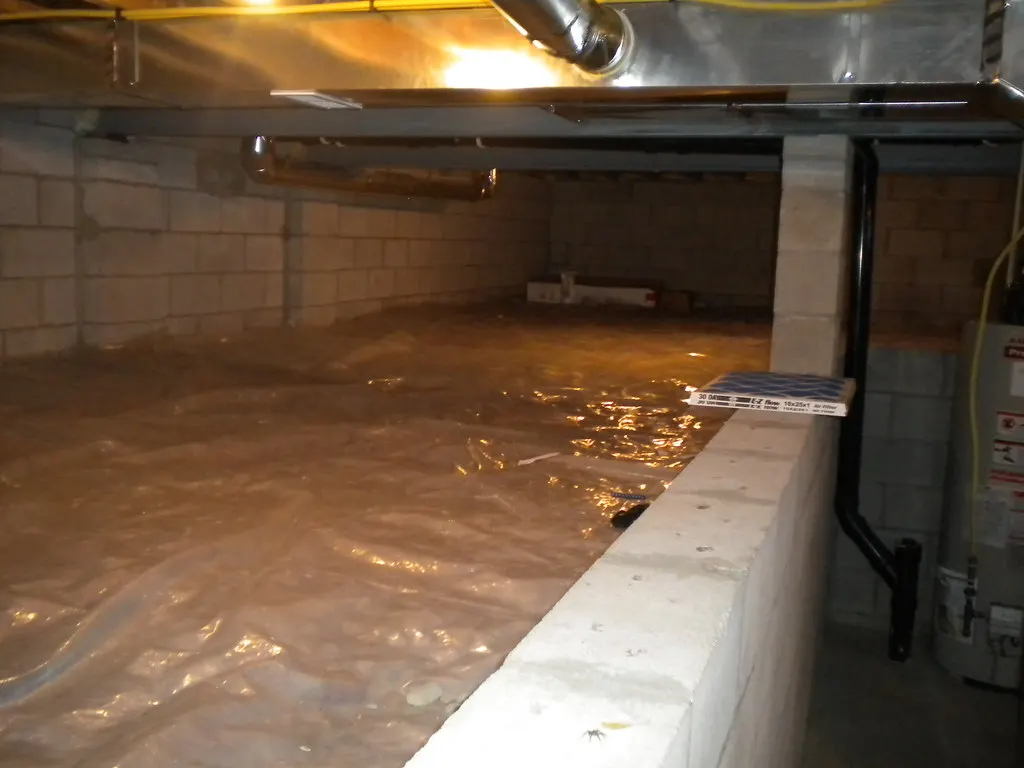
Mooresville's hot, humid summers push wet air into vented crawl spaces, where it condenses on cooler wood and ducts. Homes near Lake Norman get extra moisture in the air. The red clay soil holds water and gives off vapor when there's no good ground cover. And sloped lots can send rain right under the house.
Put those together and you get damp wood for weeks or months at a time. That's all mold needs. It doesn't take a flood, just steady dampness and a little warmth.
How crawl space mold gets handled
- Inspect and measure. The contractor checks moisture levels in the framing and figures out where the water is coming from. Air, ground, plumbing leaks and runoff all look different.
- Clean out. Old plastic, debris and wet or moldy insulation are removed.
- Treat the wood. Affected framing and subfloor are cleaned and treated with a product made to kill mold and help prevent regrowth. Heavily stained areas may also be cleaned more aggressively.
- Fix the moisture. This is the step that matters most. Depending on what the inspection finds, that may mean a new vapor barrier, a dehumidifier, full encapsulation, or drainage work.
- Walk-through. You get before and after photos and a rundown of what was done.
Treatment itself is often done in a day. If moisture control work is added, the whole project may take one to three days.
What a good contractor won't do
Mold can be a scary word, and some companies lean on that. A good contractor won't:
- Call it "toxic mold" without a lab test to back that up.
- Treat the mold and walk away without addressing the moisture. That's paying for a fix that won't last.
- Tell you to move out of your house for a typical crawl space mold job.
If you have health concerns, talk to your doctor. The contractor's job is to clean up the crawl space and keep it dry.
Wood damage and mold
Mold itself mostly stains the surface. The bigger risk is that the same moisture feeding the mold can also lead to wood rot over time. During the inspection, the framing should be probed for soft spots. If joists or beams have been weakened, ask about floor joist repair.
What it costs
Mold treatment is priced on what the inspection finds under the house. The amount of framing affected, the size and height of the crawl space and how much cleanup is needed all move the price. Moisture control work is priced separately. Your real number comes from a free inspection and written quote. See the crawl space cost guide.
What to ask any contractor
- How will you treat the wood, and what product will you use?
- What's causing the moisture, and how will you fix it?
- Will you remove wet insulation and old plastic?
- Can I see photos before and after?
Questions people ask
Is crawl space mold dangerous?
Mold can affect indoor air because air from the crawl space moves up into the house. How it affects any one person varies. We don't make health claims, but we do recommend getting it cleaned up and fixing the moisture so it doesn't keep growing. Talk to your doctor about any health concerns.
Will the mold come back after treatment?
It can if the moisture problem isn't fixed. That's why treatment should be paired with moisture control like a vapor barrier, dehumidifier or encapsulation. Dry wood doesn't support mold growth.
Do you need to test the mold?
For most crawl space jobs, testing isn't needed to decide on treatment. Visible growth on framing shows the space is too damp. If you want lab testing for your own peace of mind, you can arrange it with a testing company.
Do I need to remove all the insulation?
Wet, moldy or fallen insulation should come out. Dry, clean insulation that's still in place may be fine. In an encapsulated crawl space, insulation is sometimes handled differently, and the contractor should explain the options.