After a big storm, some Mooresville crawl spaces look more like a shallow pond. Water seeps in along the foundation, collects in the low spots and just sits there. The red clay doesn't let it soak away quickly, so it can stay wet for days. That's when you need a way to get the water out.
Why water gets under houses here
A few local conditions make this common:
- Sloped lots. Lots of homes around Lake Norman sit on lots that slope toward the water. Rain on the uphill side runs down toward the house, and some of it ends up underneath.
- Red clay soil. Clay holds water and drains slowly. Water that gets in tends to stay.
- Heavy summer storms. A hard afternoon storm can drop a lot of water in a short time.
- Gutters and grading. Downspouts that dump right next to the foundation, or soil that slopes toward the house, send water exactly where you don't want it.
Signs you have a drainage problem
Here's a quick checklist:
- Standing water or mud in the crawl space after rain
- Water lines or mud stains on foundation walls or piers
- Puddles on top of the vapor barrier
- Wet insulation near the ground
- Rust on the bottom of metal straps, ducts or equipment
- A musty smell that gets worse after storms
How crawl space water gets handled
Every crawl space is different, so the fix depends on where the water comes from. Here's what's typically involved.
Outside first
Sometimes the cheapest fix is outside. Downspout extensions, splash blocks or pointing gutters away from the house can make a real difference. A good inspector will point out anything obvious during the inspection.
Interior drainage
For water that gets in through the soil or along the walls, the crew installs a drain inside the crawl space. This is usually a perforated pipe set in a shallow trench along the perimeter or through the low areas, surrounded by gravel. It collects water and carries it to one spot.
Sump pump
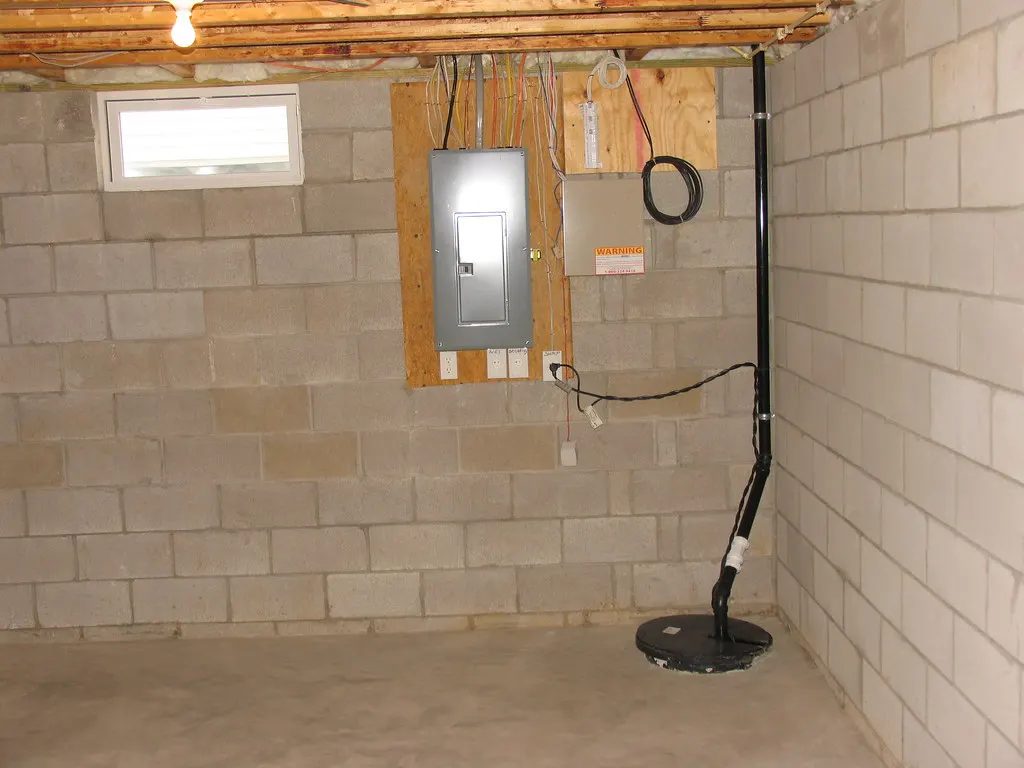
That one spot is a sump pit with a pump. When water rises in the pit, the pump turns on and pushes it out of the crawl space through a discharge line to the outside, away from the foundation.
Finish and protect
A lid goes on the sump pit, and if you're adding a vapor barrier or encapsulation, the liner goes over the drainage so water flows underneath it to the pump.
Most drainage and sump pump jobs take one to two days. Bigger systems or tough access can take longer.
Power and permits
A sump pump needs a dedicated outlet nearby. If one isn't there, an electrician may need to add it, and a permit may be required. When a permit is needed, the contractor pulls it and should tell you up front.
Some homeowners also ask about battery backup. A backup pump keeps working if the power goes out during a storm, which is often exactly when you need it most. It's worth considering if your crawl space takes on a lot of water.
What it costs
Sump pump and drainage jobs range from a single pit to drain lines running the length of the house. The length of drain needed, how many pits and pumps, how hard the soil is to dig, battery backup and electrical work all affect the price. Your actual cost comes from a free inspection and written quote. See the cost guide.
What to ask any contractor
- Where do you think the water is coming in?
- Where will the discharge line run, and how far from the house?
- What happens if the power goes out?
- Will the drainage work with a vapor barrier or encapsulation later?
Plain talk
A good contractor won't put down a new liner over a wet crawl space and call it fixed. Water has to be handled first. If drainage isn't needed, they should tell you that too.
Questions people ask
Do I need a sump pump in my crawl space?
Only if water actually collects under the house. If your crawl space stays damp but never has standing water, moisture control like a vapor barrier or dehumidifier may be enough. If water pools after storms, a drain and sump pump is usually the fix.
Where does the water from the sump pump go?
It's pumped through a discharge line to the outside and released away from the foundation, so it doesn't run right back in. The installer should pick a discharge spot that makes sense for your lot.
Can you fix crawl space water from the outside instead?
Sometimes. Fixing gutters, extending downspouts or improving grading can cut down on water a lot. On sloped lots with clay soil, interior drainage is often still needed. The inspection should tell you what will work.
How long does a crawl space sump pump last?
It depends on the pump and how often it runs. Pumps that run a lot wear out sooner. Testing it now and then, by pouring water into the pit and watching it turn on, is a good habit.