Pull back the crawl space door on a lot of Mooresville homes and you'll find the same thing. A thin sheet of plastic, torn in a few spots, bunched up in the corners, with bare red clay showing through. That plastic was supposed to keep ground moisture out. It stopped doing that a while ago.
A proper vapor barrier fixes that, and for many homes it's all the crawl space really needs.
What a vapor barrier does
The soil under your house gives off moisture all the time. Around here, the red clay holds water long after a rain, so that moisture keeps coming. Without a solid barrier, it rises into the crawl space, raises the humidity and settles into the wood framing and insulation.
A vapor barrier is a sheet of heavy plastic laid over the ground to block that moisture. Done right, it covers the whole floor, overlaps at the seams and is held in place so it doesn't shift when someone crawls across it.
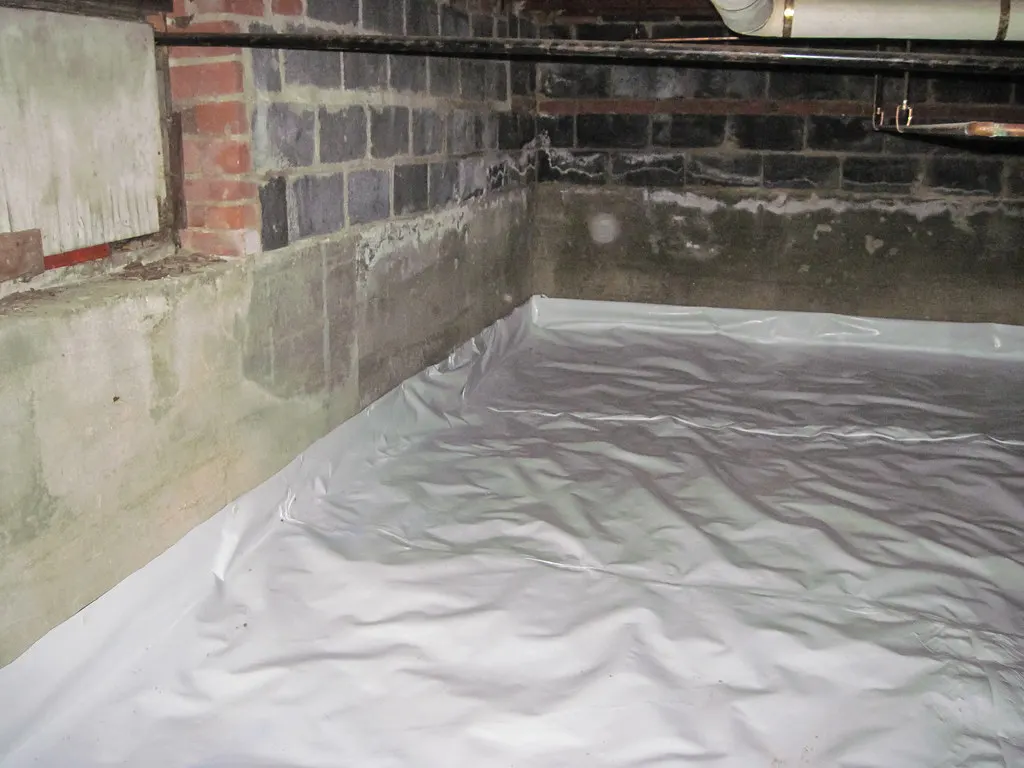
Vapor barrier vs. full encapsulation
People mix these up all the time, so here's the short version:
- A vapor barrier covers the ground. The vents usually stay open. It handles moisture coming from the soil.
- Encapsulation covers the ground and the walls, seals the vents and usually adds a dehumidifier. It handles moisture from the soil and the air.
If your crawl space is mostly dry and the main issue is a worn-out ground cover, a vapor barrier is a solid, lower-cost fix. If you've got sweating ducts, mold on the joists or heavy summer humidity, encapsulation is usually the better choice. A good contractor will tell you honestly which one fits.
Signs your vapor barrier needs replacing
Here's a quick checklist of what to look for:
- Plastic that's thin, brittle or torn
- Large areas of bare dirt showing
- Plastic bunched up in corners or pushed aside
- Water or mud sitting on top of the plastic
- Musty smell even though "there's plastic down there"
- No vapor barrier at all, which still happens in some older homes
How a vapor barrier gets installed
- Clean out. The crew removes the old plastic, debris and any fallen insulation. If there's mold on the framing, they should point it out and talk about mold and moisture treatment.
- Check for water. If the soil is wet or water collects after storms, that needs attention. Sloped lots near the lake often send runoff under the house, and drainage may be needed first.
- Lay the barrier. Heavier plastic goes down over the entire floor, with seams overlapped and taped.
- Secure it. The barrier is fastened along the foundation walls and around piers so it stays put.
- Walk-through. The installer shows you photos of the finished space.
Most vapor barrier jobs are finished in a day. Larger or harder-to-reach crawl spaces can take a bit longer.
Thickness matters
Vapor barriers are measured in mils, which is a thousandth of an inch. The thin plastic many homes were built with doesn't hold up to foot traffic, pests or time. A heavier, reinforced barrier lasts much longer and is less likely to tear the next time someone goes under to check a pipe. Ask any contractor what thickness they're quoting.
What it costs
A vapor barrier costs less than full encapsulation, since the walls and vents aren't sealed. Size, crawl space height, the thickness of the material and how much cleanup is needed all move the price. Your real number comes from a free inspection and a written quote. The cost guide breaks it down further.
What a good contractor won't do
A good contractor won't sell you a vapor barrier if the crawl space clearly needs more than that. Putting new plastic over a space with active water or heavy mold just covers up the problem. If they see something like that, they should show you and explain the options.
Questions people ask
How long does a crawl space vapor barrier last?
A heavy, properly installed barrier can last many years. Thin plastic tends to tear and shift much sooner. How long yours lasts also depends on foot traffic, pests and whether water ever gets on top of it.
Should the vapor barrier go up the walls?
Running the barrier partway up the foundation walls gives better coverage at the edges. Going all the way up the walls and sealing vents is part of full encapsulation. The contractor should recommend what fits your crawl space.
Can I install a vapor barrier myself?
Some homeowners do. The hard parts are working in a tight space, sealing seams properly, fastening the edges and spotting problems like mold or water that should be fixed first. If you go the DIY route, use a thicker material and tape every seam.
Will a vapor barrier get rid of the musty smell?
It often helps, because it cuts down on moisture from the soil. If the smell comes from mold on the framing or humid air coming through the vents, you may also need mold treatment, a dehumidifier or encapsulation.