Pop open the crawl space door on a lot of Mooresville homes and you'll see the same thing: pink or yellow fiberglass sagging between the joists, some of it lying on the ground in clumps. Above it, the bedroom floor is cold every January, and the AC runs hard all summer. The insulation was put there for a reason. It just stopped doing its job a long time ago.
Why crawl space insulation fails
Fiberglass batts between floor joists are the standard in a vented crawl space. They work fine in a dry space. Around Lake Norman, a vented crawl space is rarely dry for long.
- Humid air soaks in. Warm, wet summer air comes in through the foundation vents. Fiberglass doesn't hold up well to moisture. It gets heavy, loses its loft and stops insulating.
- Weight pulls it down. Damp batts sag, and the wire supports or staples holding them give out. Gravity does the rest.
- Critters move in. Mice and other pests nest in fiberglass and pull it apart.
- Work disturbs it. Plumbers, electricians and HVAC techs push batts out of the way to reach something and don't always put them back.
- It hides problems. Wet batts pressed against the subfloor can keep the wood damp and hide mold or rot.
If insulation is falling, ask why. Usually the answer is moisture, and new insulation won't last if that isn't fixed.
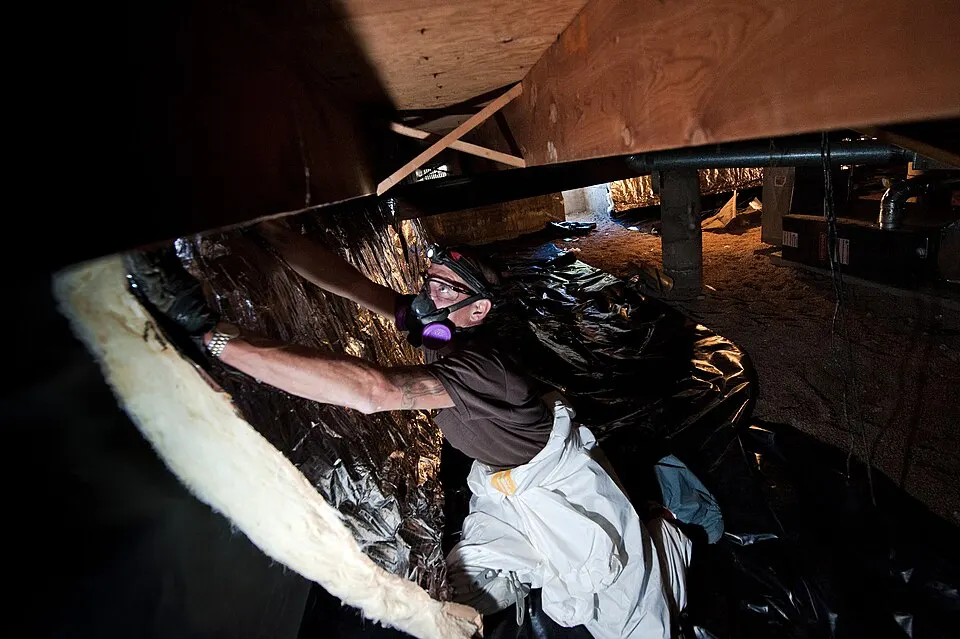
Signs your crawl space insulation isn't working
- Cold floors in winter, especially over the crawl space and near outside walls
- Batts drooping, torn or lying on the ground
- Insulation that feels damp, or smells musty
- Higher heating and cooling bills than the size of the house suggests
- Water dripping from ductwork onto insulation below it
- Pest droppings or nests in the batts
Two ways to insulate a crawl space
Which one makes sense depends on whether your crawl space is vented or sealed.
Insulating the floor (vented crawl space)
In a vented crawl space, the insulation goes between the floor joists, under the subfloor. The crawl space stays outside the house, and the insulation separates it from the rooms above. If you're keeping the vents, this is the approach. The key is fixing the moisture first with a good vapor barrier, then installing insulation that's held tight to the subfloor with proper supports so it stays there.
Insulating the walls (sealed crawl space)
When a crawl space is encapsulated, the whole space becomes part of the house. Instead of insulating the floor, the walls get insulated, usually with rigid foam board fastened to the inside of the foundation walls, or spray foam along the rim joist (the band of framing that sits on top of the foundation). The old fiberglass under the floor usually comes out, since it's no longer needed and can trap moisture. This approach keeps the ductwork and pipes inside the conditioned space, which helps them too.
Foam board used in a crawl space should be a type rated for that use, and building codes have rules about covering or protecting certain foam products. The contractor should know what applies and pull any permit needed.
Why the order of work matters
Insulation is one of the last steps, not the first. A typical sequence looks like this:
- Fix any water getting in, and any plumbing leaks
- Remove old, wet or fallen insulation and debris
- Treat any mold on the framing
- Install a vapor barrier or full encapsulation liner
- Add humidity control if the space is sealed
- Insulate the floor or the walls
Putting new batts up in a crawl space that's still damp means paying for insulation twice. If the old stuff is a mess, crawl space cleaning is often part of the same job.
Energy and comfort
Done right, crawl space insulation helps in two ways. In winter, floors stay warmer and the heat isn't working to warm up cold wood. In summer, a sealed and insulated crawl space keeps ducts from sweating and takes some load off the AC. How much you save on energy depends on the house, the HVAC system and what's there now. Be wary of anyone who promises a specific dollar amount.
What affects the price
- Square footage of floor, or linear feet of wall
- Fiberglass batts vs. rigid foam vs. spray foam
- How much old insulation has to come out
- Crawl space height and access
- Whether moisture work has to happen first
See the crawl space cost guide for how pricing works. You get a written quote after a free inspection.
What to ask any contractor
- Should my insulation go in the floor or on the walls, and why?
- What's happening to the old insulation?
- Is the moisture problem being fixed first?
- Is the foam you're using rated for crawl spaces?
This site serves Mooresville and nearby towns like Troutman, Davidson and Huntersville.
Questions people ask
Why does my crawl space insulation keep falling down?
Usually moisture. Fiberglass absorbs humidity from the air, gets heavy and pulls away from its supports. Pests and past repair work also knock it loose. Fixing the moisture is the first step, or new insulation will fall too.
Should I insulate the floor or the crawl space walls?
In a vented crawl space, insulation goes between the floor joists. In an encapsulated crawl space, the walls get insulated instead and the space becomes part of the house. The inspection will tell you which setup makes sense for your home.
Will new insulation fix my cold floors?
It often helps a lot, especially if the old insulation is missing or wet. Air leaks around the rim joist and ductwork condition also play a part. A good contractor looks at all of it, not just the batts.
Can I leave the old fiberglass up if I encapsulate?
Usually it comes out. In a sealed crawl space, the walls are insulated instead, and old floor insulation can trap moisture and hide problems. The contractor should explain what they plan to remove.