The bathroom is usually where it starts. The floor next to the toilet feels a little soft. The vinyl by the tub has a bubble that wasn't there before. A tile cracks for no reason. Under that floor is a layer of plywood or old boards called the subfloor, and when it stays wet long enough, it rots.
Rot doesn't stop at the bathroom, though. In a damp crawl space, it shows up in the sill plates along the foundation, the rim joist around the outside of the house, and anywhere termites have been working. This page covers that wood: the subfloor and the framing at the edges of the house. If your floor is sagging or bouncing across a room, that's usually the joists, and it's covered on the floor joist repair page.
Where rot shows up under Mooresville homes
Under bathrooms and kitchens
A wax ring that's failed under a toilet, a tub drain that drips, a supply line under the sink that weeps a little every day. These leaks are slow, and they soak into the subfloor long before anyone notices. From the crawl space, you'll see dark, stained wood under the fixture, sometimes with mold or soft, crumbly edges.
Along the sill plate and rim joist
The sill plate is the board that sits right on top of the foundation wall. The rim joist sits on the sill and wraps the outside of the floor. These pieces are closest to outside air, rain splashing against the house and soil that may have built up too high. Around Lake Norman, with humid summers and red clay that holds water against the foundation, sill and rim rot is common, especially under doors, decks and leaky windows.
Where termites have been
Termites build mud tubes up the foundation walls and piers to reach wood. Damp wood is easier for them, so termite damage and moisture problems often show up together. Termite-damaged wood can look fine on the surface and be hollow underneath.
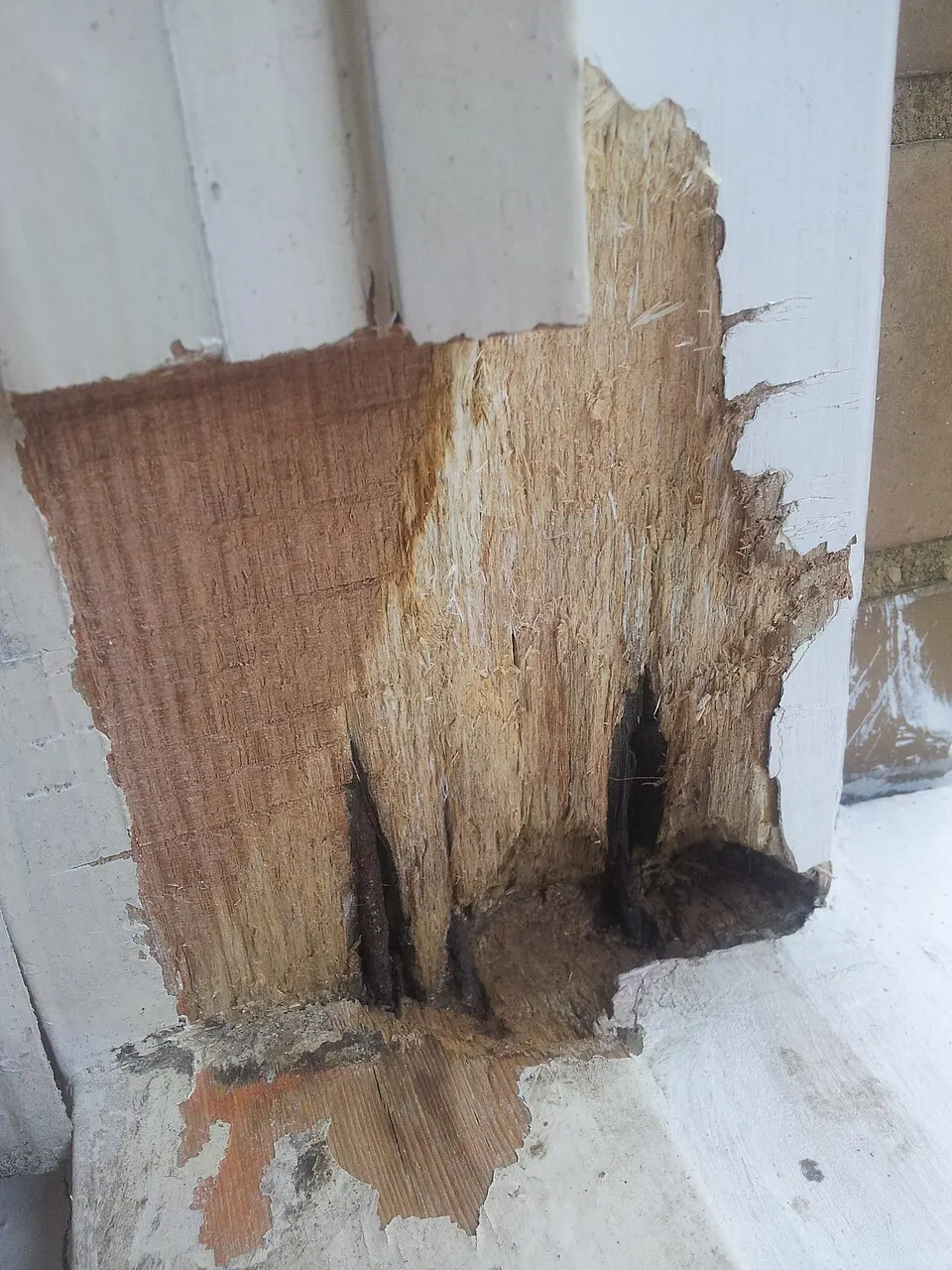
How to tell if wood is rotted
A good inspector doesn't guess. They probe the wood with a screwdriver or awl. Sound wood resists. Rotted wood gives, crumbles or splinters in short pieces. Other signs:
- Dark staining, especially in a spot under a fixture
- Wood that's soft, spongy or cracked across the grain
- White, stringy or cottony growth on the wood
- Mud tubes on the foundation or piers
- Fasteners that are rusted or loose in the wood
The inspection includes photos of anything suspicious so you can see it for yourself.
How the repair works
Subfloor
Small damaged areas can sometimes be reinforced from below with new blocking and plywood fastened to the joists. Larger areas usually mean cutting out the rotted section from above and replacing it, which means pulling up the toilet, flooring or sometimes the tub. A good contractor will tell you which approach your floor needs and what has to come up.
Sill plates and rim joists
Rotted sections are cut out and replaced with pressure-treated lumber, with temporary support holding the house while the work is done. Where only a short piece is soft, it can sometimes be reinforced instead of replaced.
Termite damage
Damaged wood gets repaired or replaced the same way. Before that, an active infestation needs to be treated by a licensed pest control company, or the new wood will be next.
Fix the cause, or the rot comes back
Wood rot needs water. Replacing the wood without fixing the water just starts the clock again. Depending on what the inspection finds, that could mean:
- A plumber fixing the leak under the bathroom
- Gutters, grading or crawl space waterproofing to keep water off the sill
- A vapor barrier or encapsulation to bring down the humidity under the house
- Pulling mulch and soil down away from the siding
What drives the price
- How much wood is damaged, and where
- Whether the repair can be done from below or needs floors pulled up
- Tile, tubs and fixtures that have to come out and go back in
- Sill or rim replacement, which needs temporary support
- Access, since tight crawl spaces slow the work
Flooring and finish work upstairs may be separate from the crawl space repair. Ask that it be spelled out. The crawl space cost guide explains how pricing works overall.
Questions to ask
- How much of the wood is actually rotted, and how did you check?
- What's causing it, and who fixes that part?
- Can this be done from below, or does flooring have to come up?
- Is there any active termite activity?
This site covers Mooresville and nearby, including Troutman, Statesville and Denver.
Questions people ask
Why is the floor soft around my toilet?
Most often it's a slow leak from a failed wax ring or supply line that has soaked the subfloor over time. From the crawl space, you'll usually see dark, stained wood right under the toilet. The leak gets fixed and the damaged subfloor gets replaced.
Can rotted subfloor be fixed from the crawl space?
Small areas can sometimes be reinforced from below. Larger areas usually have to be cut out and replaced from above, which means removing flooring and fixtures. The contractor should tell you before work starts which one you need.
What's the difference between subfloor rot and floor joist damage?
The subfloor is the layer you walk on, under your flooring. Joists are the framing that holds it up. A soft spot usually points to subfloor. A floor that sags or bounces across a room usually points to joists, which is a different repair.
Is sill plate rot serious?
It can be. The sill plate ties the house to the foundation, and rot there can spread to the rim joist and joist ends. Caught early, it's often a section-by-section replacement. Left alone, the repair gets bigger.