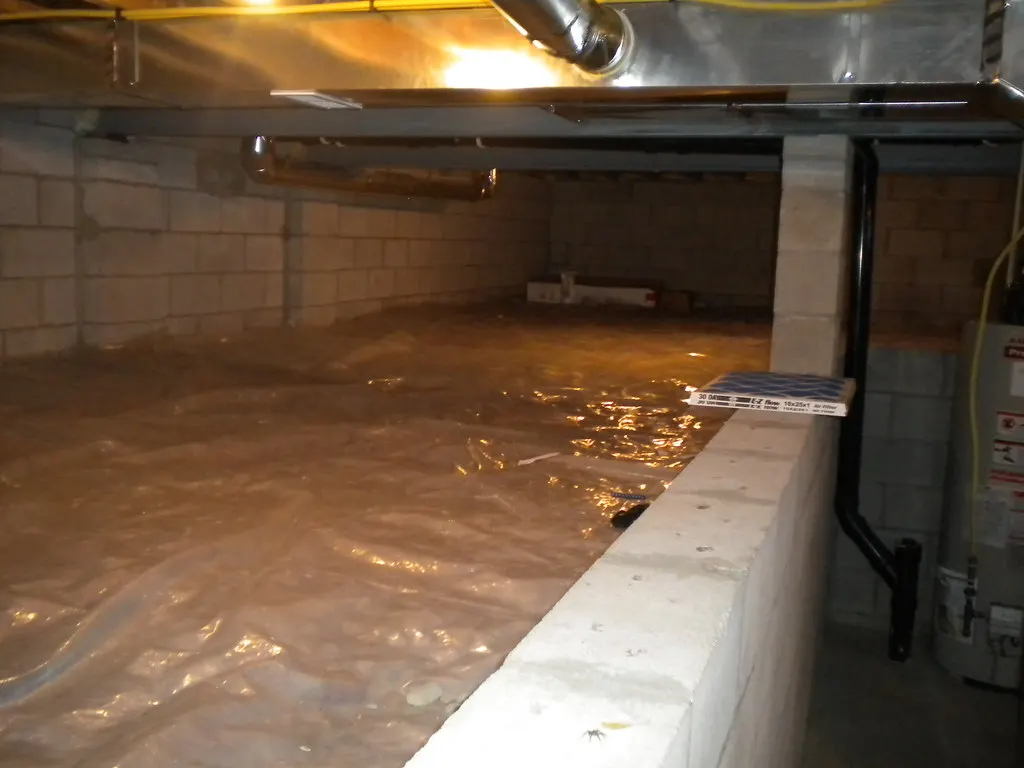
There's a difference between a damp crawl space and a wet one. Damp is humid air and moist soil. Wet is water you can see: a dark stain creeping up the block wall, a puddle by the back corner, mud where there used to be dry dirt. Waterproofing is about the second kind. It's the work that keeps liquid water from getting into the crawl space in the first place.
How water gets into a crawl space
Water is lazy. It follows the easiest path, and around Mooresville that path often leads under the house.
- Through the block walls. Concrete block is hollow and porous. When the soil outside stays soaked, water wicks through the block and the mortar joints. You'll see dark, damp patches, or a white chalky crust (efflorescence) where water dried and left minerals behind.
- Under the footing. On a lot that slopes toward the house, groundwater can push in at the base of the wall and spread across the floor.
- At the vents and access door. Foundation vents set close to grade can let in runoff during a hard rain, especially if mulch or soil has built up against them.
- From the roof. A clogged gutter or a downspout that dumps right at the foundation puts a lot of water in one spot. The red clay can't soak it up fast, so it ends up against the wall.
- From plumbing. Sometimes the water isn't rain at all. A slow drain leak or a sweating supply line can keep one area wet year-round.
A good inspector figures out which of these is happening before recommending anything, because each one has a different fix.
Start outside, where it's cheapest
Most crawl space water starts outside the house. The least expensive waterproofing work is often:
- Cleaning gutters and making sure they're sized for the roof
- Extending downspouts so water lands several feet from the foundation
- Regrading soil so it slopes away from the walls instead of toward them
- Pulling mulch and soil down below the vents and the top of the foundation
- Adding a surface drain or swale on a hillside lot to catch runoff before it reaches the house
On some Mooresville homes, that's most of the job. On lake lots with a steep uphill side, it usually helps but doesn't finish it.
Inside the crawl space
When outside fixes aren't enough, the work moves under the house.
Wall treatment. Block walls that seep can be sealed on the inside with a waterproof coating, or covered with a dimpled drainage membrane that lets water run down behind it instead of into the space. The membrane directs water to the floor, where it can be collected.
Interior drain. A perforated pipe set in a gravel trench along the base of the wall catches what comes through the block or under the footing and carries it to a low point.
Sump pit. That low point is a sump pump that sends the water out and away from the house. The sump pumps and drainage page covers the pit, the pump, the discharge line and battery backup in detail.
Leak repairs. If plumbing is part of the problem, it gets fixed by the right trade before anything else goes in.
Waterproofing vs. encapsulation
People mix these up all the time, and it leads to the wrong job getting sold.
Waterproofing stops liquid water: seepage through walls, runoff under the footing, water pooling on the floor.
Encapsulation controls air and vapor: a sealed liner over the floor and walls, closed vents and usually a dehumidifier to keep humidity down.
You can't encapsulate your way out of a water problem. A liner laid over a wet floor just hides the puddle, and water trapped under plastic keeps the wood above it damp. If water is getting in, it gets handled first. Then, if humidity is still an issue, encapsulation keeps the space dry. Many Mooresville homes end up with both, done in that order.
What makes a waterproofing job bigger or smaller
- How many walls are seeping, and how much
- Whether water comes in through the walls, under the footing, or both
- How much outside work is needed (gutters, grading, surface drains)
- Length of interior drain and the number of sump pits
- Crawl space height, since a low space takes longer to trench
- Whether an outlet is nearby for a pump
Your actual price comes from a free inspection and written quote. The crawl space cost guide explains how these factors play into pricing.
Watch for water that's already done damage
Water that's been coming in for a while can soften sill plates and joist ends near the wall, and push on block walls hard enough to crack them. A good contractor checks for both. If the walls are cracking or bowing, ask about foundation repair at the same time.
What to ask any contractor
- Where exactly is the water coming in?
- What can be fixed outside before we dig inside?
- Where will the water go once it's collected?
- Will the drain and wall treatment work with a liner later?
This site covers Mooresville and nearby, including Troutman, Cornelius and Huntersville.
Questions people ask
Why is water coming through my block crawl space walls?
Block is porous, and red clay holds water against it after rain. When the soil next to the wall stays soaked, water wicks through the block and mortar. Fixing gutters and grading outside reduces the pressure, and interior wall treatment and drainage handle what still gets through.
Is waterproofing the same as encapsulation?
No. Waterproofing deals with liquid water getting in. Encapsulation seals the space against humid air and ground vapor. If you have standing water or seepage, that gets fixed first, and encapsulation can follow if humidity is still a problem.
Can I just put plastic down over the wet spots?
It's not a good idea. Plastic over standing water hides the problem and keeps the wood above it damp. Water needs a way out before any ground cover goes down.
How do I know if my gutters are the problem?
Watch the house during a hard rain. If gutters overflow, downspouts dump at the foundation, or water runs toward the walls, that's a likely source. The inspector should check the outside of the house as part of the free inspection.